
Climate Change Awareness and Action
How to Contribute to Climate Change Prevention


Global warming stands as a critical contemporary problem which now causes widespread consequences throughout the Earth. Climate change impacts increasingly threaten the planet through the advance of sea levels and the increased occurrence of natural disasters. The positive development is that we still possess an opportunity to take corrective measures. Climate change prevention rests upon every person and organisation, and every social group alike. Taking steps both personally and collectively to improve climate change awareness will create substantial improvements in stopping its harmful effects.
SustainableFutureToday.com enables members of society, along with organisations, to implement meaningful prevention measures against climate change. This complete manual demonstrates several active methods individuals can use to fight climate change, including the integration of eco-friendly living practices and backing environmentally protective structural changes. Understanding the worldwide need for action against climate change will allow you to establish a lasting future that extends to future generations.
This section explains practical approaches followed by individual life modifications as well as organisational strategies which decrease harm to the planet. This resource offers essential tools and knowledge needed by anybody from novice climate change learners to existing commitment enhancers in order to create meaningful environmental impacts.
Understanding the Importance of Climate Change Prevention
The first step requires knowing the fundamental reasons behind climate change prevention. The human-made activities of fossil fuel burning along with deforestation combined with industrial processes are responsible for raising atmospheric greenhouse gas concentrations which drives climate change. The Earth’s temperature continues rising because heat-trapping gases accumulate above our planet which results in severe weather occurrences and increasing sea waters alongside ecosystem destruction.
We must prevent climate change because this action serves to protect all life on Earth, together with ecosystem stability and the survival prospects for the world’s populations to thrive. Climate change will persist in its damaging fashion unless major action is taken because the planet faces recurrent heatwaves and floods alongside recurring droughts, together with numerous extreme weather events. Human intervention aimed at spreading knowledge along with proactive steps will help minimise these effects while fighting global warming emissions to build a better sustainable world.
Why Climate Change Awareness and Action Matter
The beginning of positive change depends on raising public understanding regarding climate change. The development of widespread understanding about climate change causes leads people to ask for new solutions, together with policy reforms. The understanding people develop leads them to both select actions that minimise their carbon footprint and back measures which deliver substantial environmental impact.
Global Impact of Climate Change
Climate change presents international challenges that manifest differently across regions and socioeconomic categories of the human population. Vulnerable islands that rest close to the ground experience more intense sea level rise, while regions suffering from dry conditions struggle to secure their water supply. The understanding of climate change global effect enables governments and people to develop specific measures for handling particular difficulties.
Health Risks Linked to Climate Change
Public health experiences multiple adverse effects from climate change, including rising air pollution and heat-related diseases and spreading infectious diseases. Avoiding climate change will decrease health hazards while boosting overall wellness, primarily among aged citizens, along with poor families and young individuals.
The Role of Policy in Climate Change Prevention
The crucial impact on overcoming climate change originates from government-established policies. Meaningful change emerges from laws and regulations which back the promotion of clean energy along with energy efficiency together with sustainable agricultural practices and conservation methods. Global climate change prevention requires universal support for climate-friendly policies through action like voting or promotion.
The Economic Benefits of Climate Change Prevention
The process of tackling climate change demands monetary investment yet creates multiple economic benefits. Economic growth develops through renewable energy transitions and creation of green industries and development of sustainable technology platforms. The prevention measures for climate change create long-term cost savings because they minimize healthcare expenditures and protect the environment while improving industrial efficiency.
Practical Steps for Individuals to Prevent Climate Change
Comprising the majority of the population enables individuals to take essential action, which effectively reduces climate change. Many minor lifestyle adjustments create a major beneficial change. People should begin lowering their home energy usage through the selection of sustainable power sources, along with power-saving devices. Consuming plant-based foods along with the reduction of food waste helps individuals decrease their carbon emissions. People who make transportation choices will help reduce emissions by using electric vehicles and selecting walking and public transport instead of driving. The commitment to reducing waste and conserving resources becomes achievable when people put reducing into practice, combined with reusing and recycling items. We achieve dual benefits from sustainable practices because they decrease our environmental effects and make it easy for others to join the collective effort of building a sustainable future for Earth.
Reduce, Reuse, and Recycle
The simplest method for lowering your carbon footprint exists through the three-step formula of reducing waste along with reusing items and recycling materials. Your effort to reduce waste while reusing things then recycling materials will decrease the demand for new resources while lowering energy usage throughout manufacturing processes.
Adopt a Sustainable Diet
Environmental impact from food consumption reaches its peak with meat and dairy production because these sectors emit high levels of greenhouse gases. You can decrease your impact on the climate while supporting climate change efforts through a diet focus on plant foods, together with food waste reduction and backing of sustainable local farming methods.
Use Energy-Efficient Appliances
Energy consumption reduction becomes possible by installing three types of efficient appliances including LED light bulbs smart thermostats and energy-efficient refrigerators. Insulating your house properly while sealing it from drafts enables your space to need less heating and cooling hence minimizing your carbon footprint.
Choose Sustainable Transportation Options
The worldwide amounts of carbon emissions stem mainly from transportation. Select sustainable transportation methods that consist of using public transit systems and bicycle riding along with walking whenever it is feasible. The need for driving requires selection between electric or hybrid vehicles so you can minimise the environmental hazards of traditional fuel-based automobiles.
Support Renewable Energy
The shift toward solar power together with wind power and hydroelectric energy stands as the most powerful method to cut down on carbon emissions. Renewable energy providers should be your choice whenever possible when making either home or business power supply changes. You should participate in efforts that develop policy frameworks which promote the establishment of clean energy systems throughout wider scales.
How Businesses Can Contribute to Climate Change Prevention
Organisations must take essential action to fight climate change because they use substantial amounts of energy and resources. When businesses implement sustainable practices, they will produce lower environmental effects, which benefits the development of an eco-friendly economy. All organisations should begin conserving energy through LED lighting and renewable power systems as well as making their heating and cooling processes more efficient. The company achieves lower carbon emissions through both waste reduction practices, combining recycling efforts and material reutilisation, and package size moderation. Sustainable sourcing of materials supports green development that cuts down resource requirements. Businesses should teach sustainability principles to employees while maintaining CSR programs that help environmental causes to create a sustainable culture. The incorporation of sustainable practices lets companies make positive changes which display leadership against climate change for the rest of the business community to emulate.
Implementing Energy-Efficient Operations
Businesses lower their environmental effect through the adoption of energy-efficient operations that include efficient lighting together with machinery and appliances. Energy conservation efforts will significantly improve through employee participation in basic energy-saving practices including light and computer switch-off after work sessions.
Reducing Waste and Emissions
Businesses need to establish programs for waste reduction by promoting recycling with a focus on minimising their product packaging. Decreasing carbon emissions becomes possible through effective supply chain management, while businesses should utilise renewable energy sources during operations and apply green technologies for improved performance.
Supporting Sustainable Product Development
Sustainable products and services are developed through business practices that aid prevention efforts against climate change. Businesses create sustainable products through three methods, which combine eco-friendly materials with lower production energy usage while offering styles that support recycling functions to minimise environmental impact.
Educating Employees and Customers
Organizations can develop sustainable corporate cultures by instructing employees along with customers about climate topics and sustainability education. A major impact comes from training people about sustainability practices and promoting sustainable decisions made at work and in regular activities.
Engaging in Corporate Social Responsibility (CSR)
Businesses should leverage their position to support climate change prevention through CSR initiatives. Organisations that support environmental causes aside from investments in clean energy initiatives together with lobbying efforts for sustainable policies help businesses prevent climate change. Every business that makes sustainability part of its core operational values becomes an example that stimulates others to participate in climate action.
The Role of Governments and Policy in Climate Change Prevention
Governments control substantial authority when it comes to fighting climate change through sustainability-based policies which lower greenhouse gas emissions. Governments advance substantial alteration through defined emissions cut goals together with strict laws which constrain contamination. Renewable energy facilities based on solar, wind and hydropower generation need substantial investment for easing fossil fuel dependence and shifting energy resources toward non-carbon-intensive sources. Through financial support and cash-based healthy technology programs governments encourage businesses and citizens to use green practices. Governments that endorse international agreements, specifically the Paris Agreemen,t create essential frameworks for worldwide climate change cooperation. When governments establish these policies they empower themselves to minimise climate change yet simultaneously protect nature and create sustainable conditions for the entire population.
Setting Emissions Reduction Targets
The main responsibility of governments for climate change prevention lies in their ability to establish emissions reduction goals. The established targets assist companies and citizens by providing directions to decrease their CO2 pollution while participating in support initiatives. The targets structure system of rewards for clean energy adoption and penalties for high emissions activities to guide the direction toward sustainable practice implementation. The setting of precise emissions guidelines stands as a foundational requirement for accomplishing climate change prevention on international and domestic levels.
Investing in Clean Energy
The essential step to decrease fossil fuel usage requires investments into clean power systems such as wind power and solar power and hydroelectric energy. Governments need to direct monetary support for developing renewable energy projects. Research funding of clean energy technologies will yield more efficient and affordable solutions which boost the sustainability transition of the power system and decrease carbon dioxide emissions for long-term climate protection.
Encouraging Sustainable Agriculture
Planned agricultural activities that diminish pesticide amounts and implement environment-friendly farming techniques remain essential for preventing climate change. Public authorities should support sustainable agricultural systems through funding research about agricultural sustainability while providing incentives paired with tax relief programs. These sustainability efforts cut down emission production in food systems while protecting both ecosystems and maintaining agricultural resilience against climate change effects to benefit sustainable food production.
Supporting Green Infrastructure
Urban regions achieve decreased carbon emissions through expenditures made in sustainable infrastructure elements including green transit networks and low-energy buildings and environmental conservation areas. Governments need dedicated money which should fund both new and existing environmentally beneficial infrastructure. Such strategic investments fight climate change as they develop robust urban defenses and enhance both environmental quality and sustainable growth which results in established more sustainable living areas.
Engaging in International Climate Agreements
International harmonized action serves as the crucial response to fight against global climate change. The Paris Agreement together with other climate agreements requires government participation to let countries unite against reducing emissions and fighting temperature rise. Global climate change prevention requires international collaboration so all nations will actively participate using coordinated efforts that unite their shared goals and resources and actions toward addressing the worldwide crisis.
Practical Steps for Individuals to Prevent Climate Change
Common everyday life habits give individuals the ability to generate considerable effects on climate change. The best method to decrease your carbon emissions includes selecting energy-efficient home appliances with LED lights and intelligent thermostats alongside energy-saving tools. The combination of product recycling together with composting, and reuse activities promotes waste reduction that decreases both landfill waste and greenhouse gas amounts. To turn your diet into a sustainable practice, you should eat a higher percentage of plant-based food items while minimising your discarded food quantities. Selecting eco-friendly transportation methods, between walking, cycling, carpooling and using public transit, reduces the quantity of carbon emissions produced. The process of preventing global climate change becomes more effective through advocacy work for renewable energy adoption and sustainable practices in your community and workplace. Namely, through purposeful choices, everyone can build up a better world with sustainability for the generations to come.
Reduce, Reuse, and Recycle
The three Rs which consist of reduce, reuse and recycle provide the most powerful method to decrease your environmental impact. Protecting the environment happens through two-fold strategies because reducing waste stops the need for new resources while reusing items keeps them in use longer. Recycling allows the avoidance of manufacturing energy use that subsequently lowers carbon emission rates. Participating in these green practices allows you to help lower the environmental impact of humanity by protecting natural resources despite reducing waste produced in the process.
Adopt a Sustainable Diet
Climate change receives substantial contributions from emissions that result from producing meat alongside dairy products. Cheap greenhouse gas emissions result from adopting plant-based eating habits. Supporting local sustainable farmers together with diminishing food waste helps decrease environmental effects the most. The selection of foods with care allows you to decrease the climate-changing part of food agriculture thus helping global warming initiatives.
Use Energy-Efficient Appliances
Your property uses less energy once you replace conventional devices with more efficient ones. Your energy efficiency can benefit from three main changes which include switching to LED bulbs in place of standard lighting and setting up smart thermostats and operating power-efficient refrigeration units. Insulation combined with proper sealing of your house dramatically lowers your need for high Heating and Cooling operations. The modifications cut energy waste while minimizing emissions that help you conserve money on utility expenses while fighting against climate change.
Choose Sustainable Transportation Options
Transportation systems produce the highest level of carbon emissions across the entire world. Sustainable movement throughout the city starts by choosing public transport systems or carpool arrangements with walking and biking as additional choices. Electric and hybrid vehicles should be chosen for necessary car trips because they produce less carbon emissions than gasoline-powered vehicles. Making the switch towards sustainable transportation modes allows you to lower your carbon emissions while driving your community toward greener transportation choices.
Support Renewable Energy
Using renewable power sources including solar power and wind power and hydroelectric power represents the most efficient method for decreasing carbon emissions in the environment. The transition to renewable energy companies should be considered for both residential and commercial settings whenever it is possible. Support policies which champion the national move towards clean energy transition. Renewable energy backing promotes fossil fuel reduction while establishing a clean energy-consumptive and sustainable future framework.
Conclusion
All social levels need to start urgent coordinated efforts immediately to stop climate change progression. Human beings should contribute toward sustainable action in their personal lives, and businesses must pursue sustainable methods, while governments need to establish effective climate policies to protect our planet. Through concerted effort, we can bring down greenhouse gas pollution while encouraging renewable power adoption to secure our environment for the next generation. Our combined efforts to spread climate change knowledge and perform proactive action will help lessen the destructive consequences of dramatic weather events and increasing ocean level rise, besides biodiversity decline. Each minor action accumulates to develop a sustainable world with better resilience. Taking action is vital at this moment because our planet depends on the decisions we make today. We must form a single force to develop a better sustainable world. It’s time to make a change.
SustainableFutureToday.com provides resources and guidelines to reduce carbon emissions, promote climate-friendly actions, and support sustainable lifestyles, businesses, and governments for a better future starting today.
FAQs
1: What techniques demonstrate the best performance for climate change prevention?
Climate change prevention fully depends on four major tactics: decreasing carbon pollution and employing renewable resources and sustainable farming methods, and implementing climate-supportive laws.
2: What activities help people diminish climate change?
People can help through energy-saving efforts and selecting sustainable eating practices, and selecting public transport, and recycling, together with backing renewable energy ventures.
3: The significance of climate change awareness becomes vital for what reason?
Climate change awareness serves a necessary purpose since it provides understanding of climate change impacts that leads people toward undertaking emission reduction and sustainability-promoting measures across all societal levels.
4: Businesses need what strategies to fight against climate change?
Businesses should use energy-smart operations and waste reduction efforts, and sustainable product backing, together with corporate social responsibility programs.
5: Government entities play which essential part in the prevention of climate change?
Governments take a fundamental part through their establishment of pollution reduction objectives and funding for clean power networks together with support for environmentally friendly infrastructure and active participation in global climate treaty initiatives.
6: Does climate change prevention require worldwide cooperative measures?
Climate change prevention needs major international collaboration between different nations to succeed. The worldwide effort to decrease emissions requires joint work between nations to establish sustainability based policies on a worldwide level.
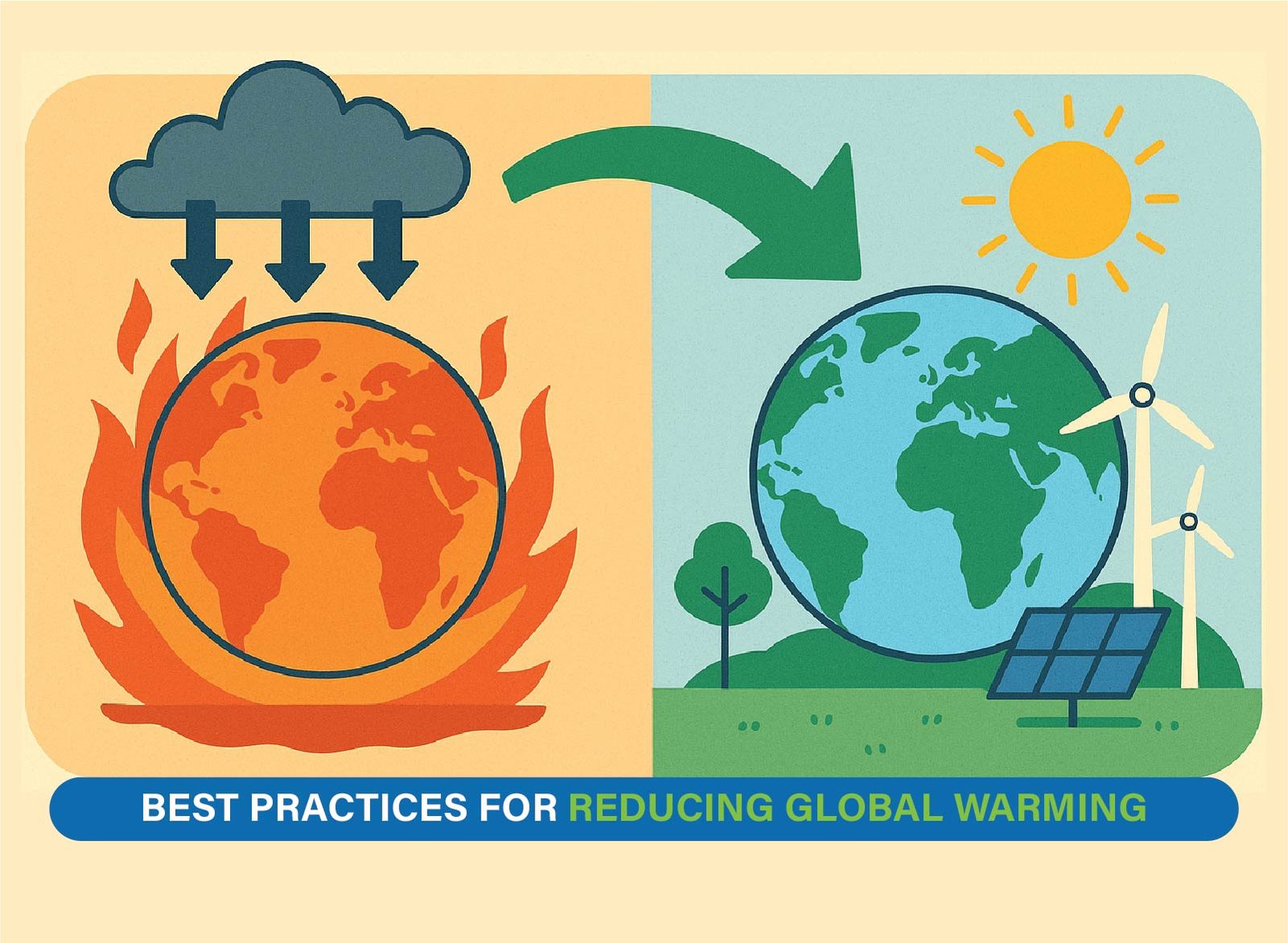
The problem of global warming is one of the burning issues of our world, and hot weather is provoked by greenhouse gas emissions due to the activity of industrialized nations. Climate change is causing disruption of the ecosystems, exacerbating nature caused calamities and posing a danger to the world in terms of food and water security. Global warming can only be reduced with the personal commitment of individuals, industries and governments working together. The good act is to shift to the use of renewable energy, the promotion of energy efficiency in the residential and business sectors, the switch to low-carbon transport, and the protection of natural carbon sinks such as forests and oceans. Individual actions also matter significantly- eating less meat, smaller portions of food wrapped in plastic, turning off the lights, and finding a brand that is environmentally friendly are also important:
On the macro-level, companies should emphasize sustainable operations, invest in environmental-friendly technology, and strictly enforce environmental laws. It is also important to educate and engage people within the community to effect long-term behavior change. All of these little steps count and cumulative action can reduce the rate of warming and make the future generations more resilient. There are five main areas in which focused practices could have a large impact discussed in this article, including energy consumption, waste production, environmental sustainable transportation, environmental conservation, and citizen engagement. This knowledge and application are principal to every person who strives to fight the problem of climate change and keep the planet safe.
Transition to Renewable Energy Sources
One of the most successful solutions to the problem of global warming will be widening the use of renewable energy. Fossil fuel emission causes huge quantities of carbon dioxide and methane to be emitted, further intensifying the green house effect. Moving to clean power such as solar, wind, and hydropower also cuts the emissions drastically and promotes the long term survival of the environment. There is a role the government, businesses, and individuals can play in making this transition speedier. Whether that is investing in energy-efficient technology or encouraging sustainable policies, it will all contribute to moving the world in the low-carbon, climate-resilient future.
Use Solar and Wind Power
The solar power panels or supporting wind power plants will help in mitigating the factors on downsizing on the fossil-based fuels either it can be coal or natural gas. The non-emitting technologies such as these are becoming more economically viable and renewable, and they generate electricity. There is also a way to get personally involved by mounting panels to a roof or by selecting a green energy source through its utility company. It is also possible to invest in the wind farms or solar fields that can run the homes and businesses and generate jobs providing clean power and safeguarding the air quality.
Support Clean Energy Policies
The increase in renewable energy should be supported by the government. Clean technology is promoted with such policies as funding research or subsidizing installation or establishment of emission levels. The citizens have an opportunity to contribute to the change through voting in favor of climate-related candidates, signing petitions, and joining consultations. These policies have the potential to generate investments in solar, wind and energy storage infrastructure, and incentivizing these policies will make renewable energy accessible and affordable to all.
Install Energy-Efficient Appliances
Replacing old appliances with energy efficient ones-say refrigerator, washing machine or air conditioner, can highly reduce the amount of electricity consumed. When you are shopping, seek products bearing ENERGY STAR or other such equivalent labels. These appliances have low emissions profile in that they consume less power but still remain efficient. It might cost more initially but savings on the utility bills and less negative effect on the environment qualify it as a decent investment in the long run, both in the pocket of an individual and the globe.
Embrace Community Solar Programs
Ideally, not all can install rooftop solar panels, and the community solar programs enable the participants to enjoy the use of the collective solar panels. Such projects provide the residents, renters and small businesses with access to renewable energy and reduce their electricity costs. By enrolling in those programs, people contribute to the development of clean energy in the region, minimize carbon footprint, and facilitate the equality of energy access among various income groups.
Reduce Peak Electricity Use
Consuming energy at off-peak times will also cut dependency on high-emission back-up power generation systems. The highest demand is normally in the morning and in the evening. Time of day shifting such as operating home appliances at night, relying on programmable thermostats or vice participation in demand response can balance the grid load. This not only has a reduced emissions effect, but also can help lower the costs of electricity, and can even reduce blackouts during periods of high usage.
Improve Transportation and Mobility
A considerable OBD2 microcontroller share of worldwide greenhouse emissions is spent in transportation caused by the continued utilization of gasoline and diesel vehicles. This burden on the environment can be diminished to the extreme with the implementation of cleaner and more efficient methods of mobility. There are various measures on how people and a government can use clean energy; these may include taking the bus or adopting the use of electric cars. A sustainable future is also backed up by urban planning that promotes cycling, walking, and mass transport. Upgrading any transport infrastructure climate-smarter not only reduces emissions, but it also increases air quality and the quality of people lives all over the globe.
Use Public Transit and Carpooling
Buses, trains and subways are all means of transportation that travel with a lot of people at the same time. Taking this fact into consideration, it is clear that they are much more efficient as opposed to personal vehicles. Carpooling as well decreases the number of cars on the roads, thus, reducing emissions. Both of them conserve fuel, reduce cost of commuting, and alleviate crowding. Of these collective choices, commutes in particular, help to achieve climate targets directly, as well as promoting cleaner and more integrated cities.
Drive Electric or Hybrid Vehicles
David Cole explains that electric vehicles (EVs) produce no tailpipe emissions, and are also getting more efficient through better battery technology. EVs cause a reduced carbon footprint when they are charged by renewable power. There is the use of hybrid vehicles which uses a mix of gas and electric energy thereby enhancing the efficiency of fuel consumption as well as lowering emissions. Shifting to either EVs or hybrids is one of the most effective decisions that drivers can make in order to address the issue of global warming.
Bike or Walk When Possible
Not only is driving replaced by biking or walking, but it is also good for health to a person and eliminates noise and air pollution. The little journeys are frequently faster and more convenient to walk or bicycle in dense cities. The right infrastructure such as bike lanes and sidewalks will help promote active transportation, which will make the eco-friendly habits a routine among more people.
Plan Efficient Routes
Advance planning enables saving of time and fuel. Traffic, idle time and excessive detours can be prevented by use of GPS or route optimisation applications. This reduces emissions and brake wear on your automobile. Considered route planning is a solution whose magnitude is small yet should be an impact factor whether in terms of daily commuting or in cases of delivery services which aims at boosting fuel consumption and reducing effects on the environment.
Advocate for Green Urban Planning
Sustainable cities trade on bike lanes, personal transport, pedestrian oriented areas, mixed use development. The promotion of green infrastructure, such as gas-free zones, electric bus lines, or train systems, can minimize the use of vehicles powered by fossils. People could contribute to such planning by their local efforts, voting or community action, and leading to the creation of livable cities as equally as environmentally-responsible.
Reduce Waste and Promote Recycling
Waste minimization is an important factor in decreasing the production of greenhouse gases and saving limited resources. Most of the things that make it to landfills could be reprocessed, composted or avoided by being more thoughtful in consumption. People and corporations can reduce their ecological impacts by a great deal to reduce wasteful synthetics and promote recycling and reuse technologies. Reducing waste in everyday practices, such as composting or using sustainable packaging, can contribute to the battle against climate change and employ a circular economy where goods and products are more highly valued based on their effectiveness and durability than their convenience and wastefulness.
Practice the 3Rs: Reduce, Reuse, Recycle
Sustainable waste management is based on the 3Rs, namely Reduce, Reuse, Recycle. Consumption reduction reduces the demand of manufacturing and suppresses emissions. The reuse of goods assists in increasing their life span, and reduces the amount of resource mining. Recycling prevents things ending up in landfills but sends them back to the supply chain. Collectively, the practices save power, cut pollution, and minimize environmental degradation. One of the easiest (and most effective) ways to take climate action is by incorporating them into everyday routine.
Compost Organic Waste
When organic waste such as food materials and clippings decay in landfills, methane which is a greenhouse gas is emitted. Composting converts that waste into soil that is full of nutrients rather than pollution. There is great ease in diverting organics by means of home composting systems or community programs. Composting helps improve the health of the soil, and it minimizes the volume of landfills and decreases the waste disposal activity-related emissions, leading to a considerable global impact and thus, a highly sustainable solution.
Avoid Over-Packaged Products
Too much packaging particularly in plastics contributes to landfill wastes and consumes energy to manufacture and transport. This can be lessened by selecting products with little, recyclable or compostable packaging. Purchasing at bulk rates, carrying their own bags and choosing loose fruit and vegetables are some of the easiest ways to reduce. How this can be done is by avoiding over-packaged products as not only this helps reduce the environmental impact but it is one way of sending a signal to companies to reduce their unsustainable practice by packaging more products.
Repair Instead of Replacing
A small repair is a great political act in a society that values disposability. Repairing electronics, clothing or furniture prevents their use in landfills and prevents the energy and materials involved in creating new goods. Basic repair skills can be acquired or Community Repair Cafe can be used which stretches the life of products, saves money and decreases waste. Repair also facilitates the creation of a culture of sustainability and care, the key to the fight against climate change through the reduction of consumption.
Support Circular Economy Brands
The focus of a circular economy is to do away with waste by means of ethically designing products in a manner that will allow reusable, recyclable or straightforward refurbish items. By promoting companies that adhere to this pattern, we can cut down on using extractive and wasteful production models. Durability, take-back programs and sustainable materials are of importance in these companies. When consumers purchase and work with circular economy companies directly, they engage in indirectly promoting innovation that conserves the environment and curbs global warming.
Conserve Natural Resources
Saving natural resources is important in reducing global warming and ecological balance. Forests, wetlands, oceans and soil systems have a key role to play in capturing carbon and controlling climate. Preservation of these ecosystems and ability to use natural resources in a smart way will result in fewer emissions, increase biodiversity and resilience to climate change damage. A combination of sustainable farming and wise consumer habits can be complemented by simple gestures, such as tree planting or water conservation approaches, all of which may bring positive change to the environment and ensure that the planet can be kept safe and sound by means of future generations.
Plant Trees and Support Reforestation
The trees also help to bind the carbon dioxide, cleanse the air, shelter wildlife which makes them best friends in getting climate change. Carbon sequestration, the restoration of degraded grounds can be also achieved through reforestation initiatives and on-ground tree-planting activities. By donating, volunteering, or even planting in a community of your choice, you are able to offset carbon emission and lead to a healthier planet. Each tree planted means a step to decrease the atmospheric carbon and create resilience to climate changes.
Protect Wetlands and Forests
Wetlands and forests are highly potent carbon sinks that can hold heaps of carbon and allow high rates of biodiversity. That stock is in the forest or in the wetland, when that is deforestated or transformed, the carbon is emitted. By protecting such ecosystems with green zones, prudent land management, or outspoken support, emissions will be stopped, and the ecological balance will be preserved. They also improve flood control, purify water, and promote the health of the soil, thus being vital components of the worldwide plan to stop climate change and preserve our future.
Use Water Wisely
Conserving water also has mined effects on reducing the emissions of greenhouse gases as the treatment and the distribution of water consume a lot of energy. Water waste can be reduced drastically by fixing leaking taps, using energy-efficient appliances as well as the installation of low-flow fixtures. Saved Water also comes through outdoor initiatives such as drought-resistant landscaping. With sensible water use, people can cut down on the energy spent on water pumping and heating, which would minimize the carbon imprint of the household, as well as decrease pressure on the civic infrastructure and freshwater bio systems.
Practice Sustainable Agriculture
Farming is resource intensive so far as the environmental impact is concerned; however, sustainable farming practices can ameliorate this. Practices such as crop rotation, no-till agriculture, organic manuring and cover cropping increase soil fertility, controls erosion and cuts down emissions. The practices also enhance production and the ability to withstand climate stress. By eating organic produce, cutting down food waste, or even urging governments to implement eco-friendly farm practices, one contributes to a food system that supports and nurtures both the people and the planet.
Choose Eco-Friendly Products
Environmentally-friendly products do not pose many consequences to the environment and are made using environmentally-friendly resources, and ethical processes. By opting to use products which are certified green, such as Fair Trade, FSC, and USDA Organic certified products, one will be encouraging companies that have the welfare of the environment at hand. It also decreases pollution as well as resource consumption by avoiding products that have too much packaging or contain harmful chemicals. Mindful consumer choices would counteract the market pressures to have extractive industries and lead to a cleaner and more sustainable economy that meets climate targets.
Educate and Advocate for Policy Change
To address the problem of global warming one needs not only personal solutions; they also need popular education and sound policy changes. Communities are encouraged to change the system environmentally by creating awareness and engaging in political discourse. Promoting climate policies supported by science and advocating leaders concerned with sustainability will help us to achieve progress at the local, national, and global levels. It is through education both official and unofficial that individuals are able to comprehend the problems, make wise decisions and seek accountability by the corporations and the government in the battle against climate change.
Raise Awareness in Your Community
The climate action begins with dialogues. When talking to friends, family, neighbors and local organizations about global warming, they will enlighten other people and also promote a sense of collective responsibility. They can be inspired by hosting events, publishing reliable resources, or organizing workshops to use eco-friendly practices. Increasing community awareness also gives impetus to bigger movements and policy changes because individuals are more connected and feel empowered in committing action when feeling informed about the local and global ramifications of climate change.
Support Environmental Legislation
Policies enacted by the governments are very influential to the results of the environment. Bringing in laws that curtails emission, injects investment in clean energy, or conserves natural habitat is important. The personal actions you can take into consideration include voting climate-friendly politicians, messaging with congressmen and women, and being aware of proposed environmental regulations. Grassroot advocacy through the polling booths and beyond means governments will have to act on climate change with a meaningful action plan and accountability of resources.
Participate in Climate Protests
Climate marches encourage the population to act on the environment. Appearing at the march, going on strikes, or engaging in digital campaigns attracts the media, and pressures the decision-makers. Such activism as Fridays For Future or Earth Day campaigns unite the entire planet. Participating is not all about being in solidarity but also enhances individual voice on climate matters as a whole. On the streets or online, publicly visible activism serves as a reminder to governments and industries that inaction on climate comes with social, economic and political costs.
Follow Trusted Climate Sources
When you read a reliable source of information about climate, you have an opportunity to prove your actions and opinions by some scientific facts. The current research and policy analysis are covered by organizations like the Intergovernmental Panel on Climate Change (IPCC), NASA Climate or the World Resources Institute. Through their reports and news, it is possible to learn more about the change in climate, remedies, and the consequences on the globe. Effective advocacy and individual choices in the struggle against global warming require the aid of reliable knowledge.
Encourage School Climate Education
Climate education at early ages will create environmentally conscious generations. Endorse initiatives to incorporate sustainability issues in school curricula, including science and geography and social studies. Schools and teachers who focus on climate literacy give students the means to investigate, learn, and problem-solve environmental problems. Either in PTA meetings, via petitions, or during the volunteering process, parents and educators can foster a school of environmental literacy that would equip young people with the ability to enact solutions to climate in the future.
Conclusion:
The battle against global warming has its part to play as an individual and system-wise. Be it through selection of cleaner energy, to endorsement of climate policies, each effort counts. Climate mitigation is an important strategy to reduce carbon emissions, save natural resources, and adopt sustainable behaviors. The success of our future as regards the environment will depend on cooperation among citizens, communities and governments. With these best practices, we will be in a position to create a healthier earth and leave the impacts of climate change at a slow pace to the future generations.
Begin to make climate-smart decisions. Use renewable energy, cut down and preach on green policies. Any effort makes a difference when it comes to global warming. Share the tips and invite more people to participate in the movement of a cleaner, cooler, and stronger world.
FAQs
1:What would be causing global warming?
Trapping of heat occurs at the atmosphere of earth through burning of fossil fuels, deforestation, and industrial activity of greenhouse gases.
2:How can I contribute in simple ways?
Consume less energy, recycle, use public transport and advocate climate friendly policies.
3:What uses of renewable energy are helpful?
It substitutes fossil fuels cutting the carbon emissions and air pollution.
4:What is the importance of planting trees?
One of the major greenhouse gases that have led to global warming is the CO2 and it is absorbed by trees.
5:What are the sustainable products?
These are products that are produced with low environmental effect, many of them using renewable or recycled materials.
6:What can schools do to fight global warming?
Through a curriculum in climate science teaching, wellness practices in sustainability and the facilitation of student-based environmental initiatives.
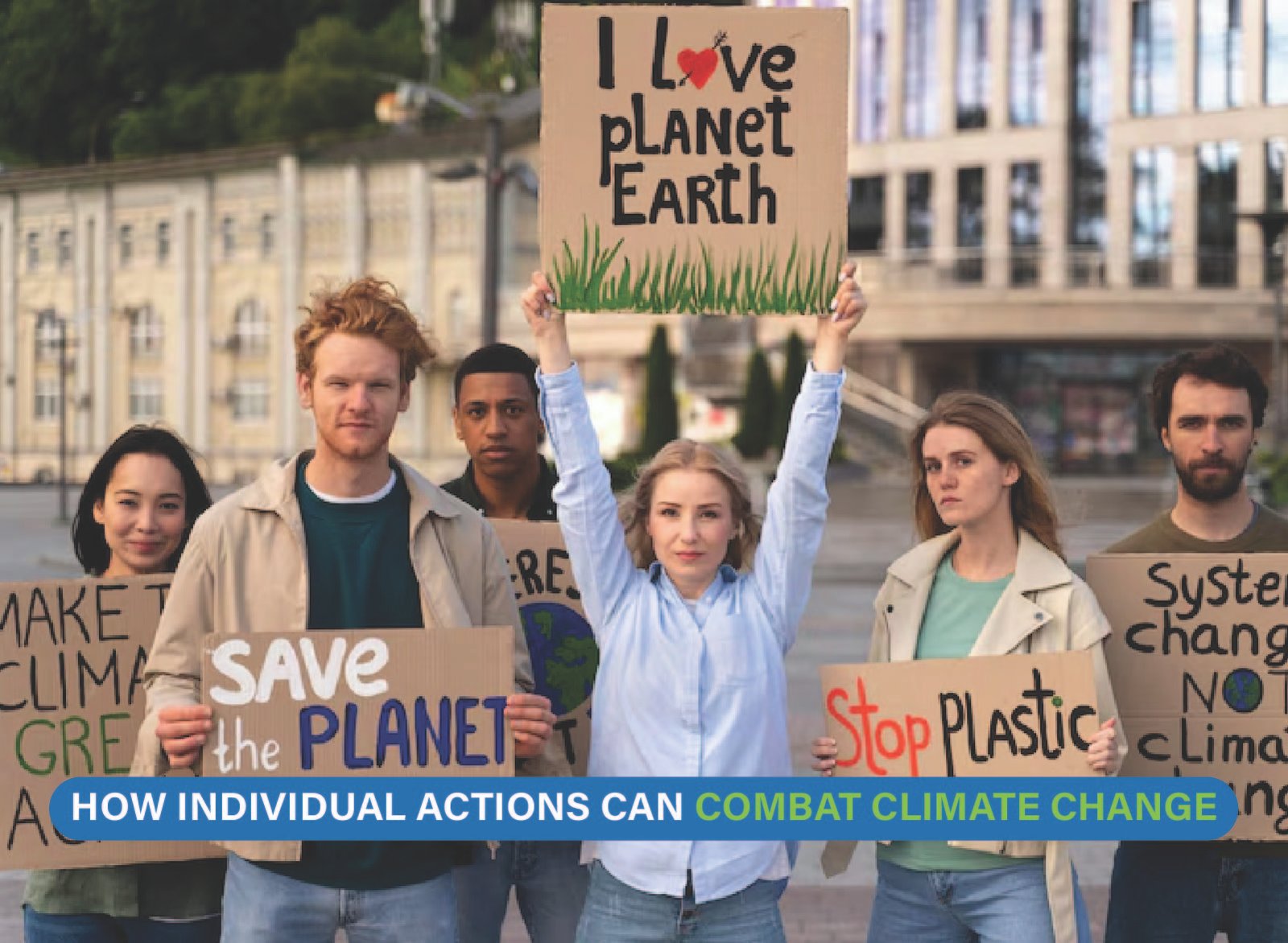
Individual actions of Climate change can be a big problem that is felt around the whole world and it is a situation that one may feel too small to impact but personally one can make a significant impact in making the world a sustainable environment to live in. Each of the decisions we take, whether it is cutting down on energy consumption, altering the way we travel, or a purchase of sustainable food products makes an impact on the overall carbon footprint. Through responsible choices, we will be able to reduce emission of greenhouse gases, preserve natural resources and promote environmentally viable systems. Such actions not only cause a decrease in the destruction of planet but also inspire the people around them to make wiser decisions. Every action starts with individual responsibility.
The individual who is using fewer plastic items, who shuts off the lights, when she is not using them, or the person who chooses not to take a car drive home, buys coffee or takes the elevator, may be minor actions but when millions of people contribute to the effort, the effect is enormous. In addition, local initiatives in many cases end up to larger transformations in the system as communities push policies towards green lifestyles. There are ways to go green every day and make your lifestyle climate-friendly, including turning off the faucets and purchasing used items. We are the ones who have the power to fight climate change, and it begins right at home. Daily habits are important and the smallest thing you do can produce a permanent positive effect on the environment.
Reducing Energy Use at Home
One of the best individual measures to overcome climate change is to reduce household consumption of energy. Homes use electricity which in most cases is produced by fossil fuels which cause emission of green house gas. Energy wastage can be facilitated to a great extent by undertaking some basic improvements such as using energy efficient appliances or undertaking better insulation. These minor adjustments, including turning off appliances that are not in use or smart thermostats, can build up with time. There are more intelligent ways to act and go green that can cut the budget as well as reduce the carbon footprint of a person helping create a more sustainable future step by step.
Switch to Energy-Efficient Appliances
The out of date appliances use more power than is needed. These can be substituted with more energy efficient ones such as whichever has the ENERGY STAR label on it, energy consumption and emissions can be heavily reduced. They are also expensive in the short term but make savings in the long run and help in green living. With the greatest effect, focus on key energy consuming devices-refrigerators and washing machines.
Unplug Idle Electronics
Appliances such as chargers and televisions continue to consume electricity even when switched off when they are plugged in. Such a usage of phantom energy increases as time goes by. This waste is prevented by unplugging electronics or by use of smart power strips. It is a simple and painless means of decreasing your energy bill and lowering carbon emissions without a large effort.
Use Smart Thermostats
Smart thermostats recognize your schedules and increase or decrease heating or cooling as you do. This saves energy wastage and still keeps it comfortable. There are also plenty of those giving real-time feedback, which means that you can monitor and work on your habits. It is a high-tech solution to control energy consumption, and keep some money in the pocket all year round.
Improve Home Insulation
Improved insulation makes your home warmer when it is winter, and colder during the summer. This decreases the requirement of heating or air conditioning, both of which are big energy consumers. The simple addition of insulation in attics, walls, and floors will enhance efficiency by a large margin, bring down utility expenses, and to lower the greenhouse gases emitted by your house.
Turn Off Lights and Devices
The habit of switching off lights, fans, and electronic equipment that are not in use is small but strong. Better still, change to LED bulbs that consume less energy and have long purchase life. All these minor steps conserve energy and minimize your carbon footprint in the long run but are painless and do not interfere with your comfort and convenience.
Sustainable Transportation Choices
One of the major sources of green gases is transport. Modes of transportation are authentically one of the crucial aspects of determining our carbon footprint. Ways to reduce the traffic by using walking, biking, carpooling, and using public transportation is a good idea. Increasing the use of greener means of transport such as electric vehicles and reducing air travel are good individual solutions. By taking a bit of planning and determination, citizens can make some more intelligent transport decisions that will contribute to both global and urban air health.
Walk or Bike for Short Trips
Driving is a non-zero-emission form of transport; an alternative specifically in the short distances are either walking or biking. Not only does it reduce the use of fossil fuels, but also has health benefits in terms of being fit and being less stressed. By making such a choice or choice whenever they are available, they have less traffic congestion, and help with clean air around especially in urban areas.
Use Public Transportation
When compared to one-car cars, buses, trains, and subways take many people at a time and are, therefore, much more efficient. When you decide to use public transit, you contribute to the reduction of per-person emissions and the total amount of fossil fuels consumption. This is also likely to alleviate congestion in the cities and demands to increase road facilities, which is beneficial to the people and the environment.
Carpool When Possible
When you give a lift to your friends, family or even colleagues, it alleviates the traffic. This results in fewer burned up fuels, fewer emissions in the air, and fewer vehicles of the overall traffic. Carpooling also assists in saving gas and parking fee, thus; it is a cheap and environmentally friendly way to commute.
Drive Fuel-Efficient or Electric Vehicles
In the event that you need to drive then opt to a hybrid or entirely electric type of vehicle. The cars consume less or no fuel at all thus significantly cutting your own burden to greenhouse gases. They also reduce maintenance and fuel expenses over the long term, particularly as charging infrastructure gets more common.
Avoid Unnecessary Flights
Air transport contributes to a great share of CO2 production, particularly, on overseas flights. When feasible, limit flying by taking the train instead or vacationing or combining trips. In case you cannot avoid flying, you may offset a part of your carbon footprint by using trustworthy providers who will invest in clean energy sources or reforestation initiatives
Make Sustainable Food Choices
Our diet has a considerable green implication. Being conscious with food choices, e.g., consuming more plant-based dishes and fewer food wastes, will minimize greenhouse gases and decrease the burden on the environment. Purchasing from locally owned and organic farmers builds on the idea of sustainable agriculture and lowers the pollution caused by the transportation sector. Even the minor changes such as reducing packaging or composting dead food helps create a healthier planet. Each dish is a chance to do something about climate change because your diet is not only a matter of the health of the body but also an act of the planet.
Eat More Plant-Based Meals
Vegetable based diets need less resources such as water and land and produce less greenhouse gas than the meat-intensive ones. Replacing meat with legumes, vegetables, and grains two to three times in a week can contribute significantly to the environment. The impact of change can be seen when pocket changes, such as making a meat-free lunch once a week, are scaled out to the world.
Buy Local and Seasonal Produce
Local and seasonal foods are produced near home and so it minimizes transportation and refrigeration-related emissions of transporting long distances. Such decisions benefit local farmers, conserve the local biodiversity and is usually fresher because of the reduced supply chain. Dining according to the seasons is also another way to promote diversity and also greater harmony with the natural process of growth.
Reduce Food Waste
Food wastage uses up all the energy and resources used in producing, delivering and preparing food. Planning meals, creative use of leftovers, and storing food help to avoid excess waste. Composting organic wastes will prevent its direct funneling into landfills where the scraps would emit fumes of methane- a greenhouse gas.
Choose Organic and Regenerative Options
The farmer approaches to organic and regenerative agriculture are healthier soils, biodiversity, and absence of toxic chemicals. The techniques assist in retaining carbon in the ground, in conservation of water and in balance of the ecosystem. The way to choose such products will help convince more farmers about adopting environmentally friendly agricultural practices.
Cut Down on Packaging
Unnecessary packaging particularly plastic packaging causes wastage and depletion of natural resources. Purchasing more than you need, checking out reusable bags and containers, and buying products with less or recyclable packaging are some of the ways of ensuring that household waste is minimal. Such habits not only save the environment but also increase the needs of the consumers to sustainable options in the packaging sector.
Conscious Consumer Habits
The effect of your daily shopping is a wave on the environment. Engaging in conscious consumer practices allows you to waste less, conserve, and sustain. Instead of buying lots of things, you can do something stronger and better, which is to buy quality over quantity, single-use plastics, and environmentally friendly brands. Second-hand shopping and recycling will reduce environmental damage as well. The message is in every product you consume, or one you refuse to consume. Conscious consumption is also an essential component of the comprehensive answer to climate change and ecological destruction.
Buy Less, Choose Quality
Spend money out of quality items that can be used repeatedly as opposed to cheap disposable items. This lowers the need to produce a lot and limits wastage in the long run. It also happens that when there are fewer purchases the number of resources used in producing and transporting products is reduced. By selecting classic, withstanding products, it allows environmental sensitivity and saves money, which would have been spent otherwise.
Support Eco-Friendly Brands
Select companies who worry about the sustainability of their production, materials and packaging. Several brands currently consume recycled, renewable energy and responsible human resources. By funding these firms, this is promoting improved industry performance in addition to motivating the need to purchase more environmentally-friendly products. Whenever you purchase thinking about the environment, you are putting your money into environmental activism.
Reuse and Recycle
Make products last longer before disposing them by purposefully using them to serve other functions. Recycling materials properly prevents land-filling and also keeps material in circulation. Familiarize yourself with local recycling requirements so that you do not contaminate. Using jars, boxes and bags again instead of throwing them away can also save waste material in your house and make you a more eco-friendly person.
Say No to Single-Use Plastics
Single-use plastics contribute significantly to pollution and this is a problem with waterways and oceans in particular. Exchanging them with something that can be reused, such as cloth bags, glass cases, or metal straws, helps cut the waste to a large extent. Such transition will allow reducing the amount of plastic that needs to be extracted and will decrease your ecological footprint with just a few changes.
Shop Second-Hand
Second-hand stores eliminate the need for new production and keep the goods that can still be useful out of the landfills. The purchase of second-hand clothing, home goods, and electronic devices will contribute to a close cycle economy and reduce the greenhouse emissions related to the fast fashion industry and excessive production. It is also cheaper and can be more rewarding with special and good quality purchases.
Promote Awareness and Community Action
Personal efforts alone are good, however, in community, they are enhanced more. Building a sustainable culture is achieved through promoting awareness and mobilizing people. Self-education and education of others develops an impetus of change. The way you vote or open a green program at school or your workplace can make a wider motion. When you join local environmental organizations or even by just setting an example you are taking part in a collective conscience of our planet. What makes communities effective is by being able to convert concern into collective action? That is how real change occurs.
Educate Yourself and Others
Be educated with climate science, climate solutions, and policy. Post believable information on social media, friends and family so it can be discussed. Information is a sovereign thing to make wiser decisions and power grassroots action. The educational process, sharing knowledge with other people, particularly younger generations, contributes to the longer-term sustainability and cultural shifts.
Vote for Environmental Policies
Promote political campaigns and references that focus on clean energy, progression and the reduction of emissions. Voting is considered to be one of the most environmentally influential methods to claim mass change. Look up the environmental policy of both platforms, and influence others to consider voting with the environment in mind.
Join Local Environmental Groups
Endorse those political leaders and campaigns that support clean energy, sustainability, and reduce emission. Voting is an effective way to force large-scale environmental change. Study the environmental stands of candidates and political platforms in order to make informed votes. Help others to cast their ballot in an environmentally friendly way. The evolution of a better policy begins with democracy- at the ballot- when we vote to save the environment, it gives us a chance to build a future characterized by accountability to climate, renewable energy and sustainable development.
Start Sustainable Habits at Work or School
One of the realistic methods to make a difference is to involve oneself with local environmental groups. These agencies provide chances of community action such as planting trees, clean up activities, and environmental activism. The interaction with likeminded people gathers momentum and gives you leverage. There are more achievements, not only in action but also in building this sense of purpose and satisfaction that comes along with collective action. Collectively, we can initiate change at grass root level and bid goodbye to a greener future.
Lead by Example
Practice is better than preaching. You are more likely to have others follow you when they observe you take such sustainable decisions as biking to work, plastic reductions, and waste minimization. Being a role model helps establish credibility and it brings about change and need not pressure or preach.
Conclusion:
The issue of global warming might be viewed as one problem so big that an individual cannot make any impact, but it is always the individuals who have brought actual change. All your choices, including how you make your way, what you consume and how you utilize power, can be a part of further greenhouse gas emissions. Every little decision when multiplied by millions of people can make a huge overall difference. People can shape the markets, change cultural values and make governments do more outstanding acts.
By adopting sustainable quests and pursuing them in everyday life, you set a successful example of reducing your own carbon footprint but also influence those who can watch your example and repeat it. Donating and educating yourself, advocating green policies and talking publicly about environmental issues are things that will produce a long-term effect. There is no longer an option to take climate action, rather it is necessary. Our future and the future of the planet is all what we do today, and every step you take would really count. Be the model. Be the one to change. Start now.
Do something small, but do it. Pay attention to your daily routine and find a single aspect, which you can alter, i.e., limiting the number of single-use plastics, cutting on the amount of electricity, taking public transportation, or participating in a local ecological initiative. All little things make a difference. Tell everyone about your path; transparency creates community action. When individuals witness the positive change in action, they are more prone to participate. We all can create a livable, sustainable planet. The future belongs to us, so why not begin modeling it now, one step at a time.
FAQs
1: Does one individual actually contribute to the battle against climate change?
Yes. Although the crisis cannot be solved by the actions of one individual, actions of individuals cumulatively will make a difference in solving the crisis as they motivate others to take actions to solve the crisis.
2: How can I make the transition to living more sustainably the easiest one?
Start by doing little things such as utilizing less of your energy, use less plastic, vegetate more, and preserve water.
3: Is an electric car all that is needed to reduce my carbon footprint?
This is useful, but even more useful to mitigate emissions would be to walk, bike, or take public transit instead.
4: What are the benefits of consuming less meat to the planet?
A lot of greenhouse gases are released through meat production. Consuming fewer animal products decreases the demand hence de-escalating emissions and land usage.
5: What role does waste reduction play for climate change?
Wastes lead to pollution and emission of methane gases. Composting, recycling, and reuse reduce the amount of wastes and emissions.
6: What can I do to change people to be concerned about climate change?
Laws have the responsibility of informing, ruling, and demanding compliance of sustainable habits in their homes, workplaces, or communities.
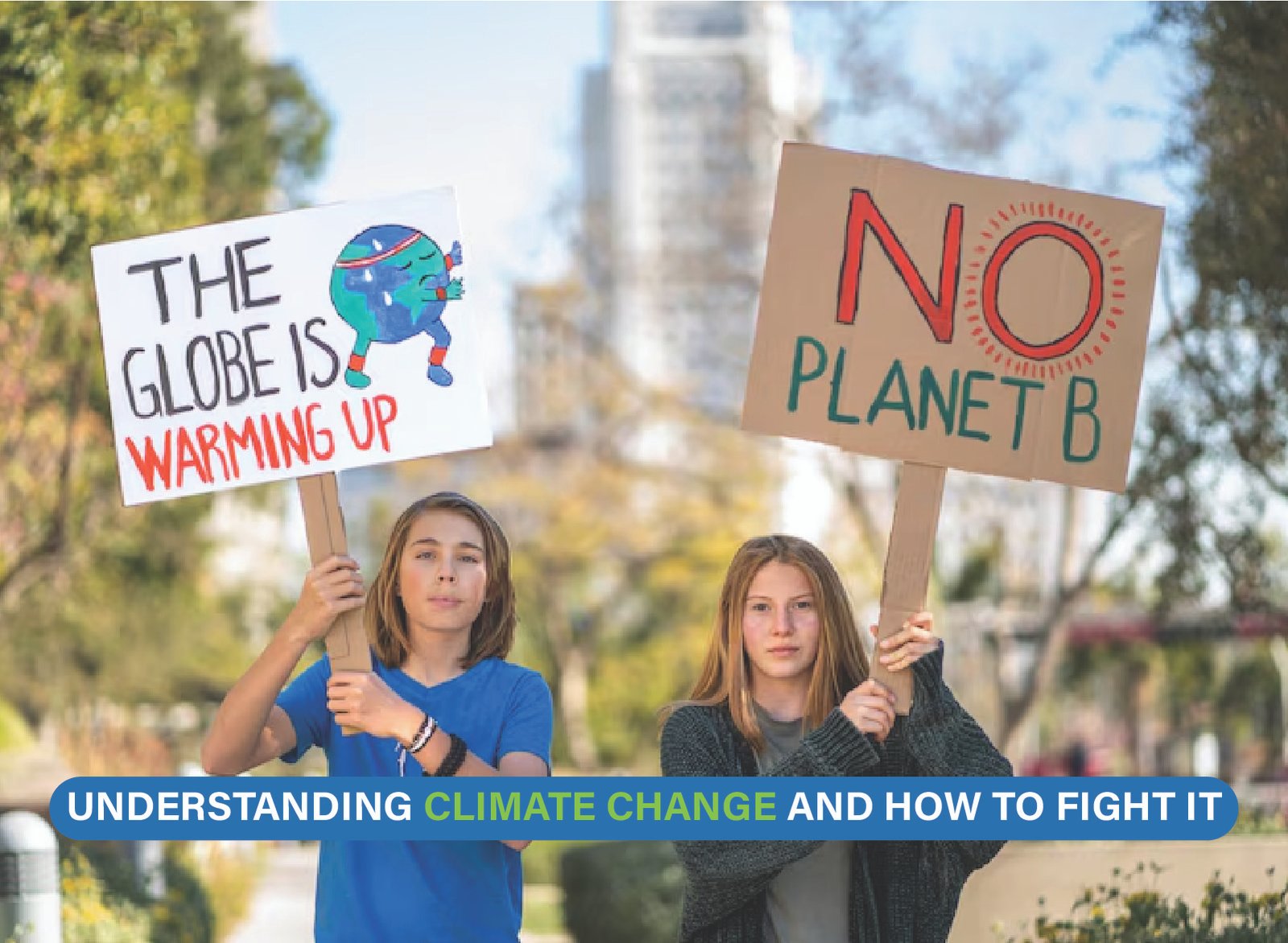
Climate change is not the threat which is to happen only tomorrow, but it is the crisis which is influencing the ecosystems, economies, and communities on the planet now. Climate change also causes increased temperature, melting polar ice caps, severe weather and the rise of ocean levels because of the actions of people who release greenhouse gases by burning fossil fuels and cutting down trees. To deal with climate change, international cooperation is necessary as well as local intervention. Although it is essential to implement international policies and use green technologies, it is also important to alter personal lifestyles and take an active part in community activities.
Through the knowledge of science and being aware of its effects in the real-life and being serious about changing, we can collectively combat this crisis. This article answers the question of what is climate change, why it is happening, what the repercussions are, and what the entire world can do to fix the problem, and thus enabling the reader to join the solution instead of the problem. By education, policy, innovation and sustainable living, we can alleviate such risks and create a more healthier and stable planet to be inherited by future generations.
Understanding the Science of Climate Change
The science behind climate change is the key to understanding how wide-spread and critical the issue of climate change is. Climate change is due to increased presence of greenhouse gases in the atmosphere like carbon dioxide and methane which trap heat causing climatic changes. Such enhanced greenhouse effect, which is caused by human activities, interferes with the climate systems of the earth. By studying temperature records, ice cores, and atmospheric data, scientists are monitoring this trend in warming and its reasons. There is clear evidence of human influence largely since the Industrial Revolution. With polar ice being melted, oceans warming, and the increase of temperature on the planet, ecosystems are getting disrupted. Having the scientific basis to understand will dispel the myths and encourage intelligent action. The collective solutions start by climate literacy.
What Are Greenhouse Gases?
Green house gases such as carbon dioxide, methane and nitrous oxide keep the Earth warm thus living. This balance however is distorted by too much pollution of automobiles, factories, and farming. The number of these gases is too many and these gases contribute to global warming. The knowledge of their role in the process will help decrease the emissions and avert the speed of climate change with sustainable human activity.
How Human Activity Affects the Climate
Demographic activities such as combustion of fossil fuels, cutting of trees, and commercial cultivation emit high levels of greenhouse gases. This emission enhances the concentrations of heat in the atmosphere and this interferes with climatic systems of earth. The outcome is increased heatwaves, higher sea levels, and storms getting more robust. Controlling these actions is essential to end climate change and preserve environmental stability.
Climate vs. Weather: What’s the Difference?
Weather is used to describe the short-term conditions such as rain or sunshine whereas climate talks of the long term patterns over decades. Climate change implies changes in the average world temperatures, rains, and sea level. To mix up weather and climate may cause confusion. Being aware of this disparity will assist in understanding why long-term environmental trends and not variations encountered on a day to day basis are a sign of changing climatic conditions in our world.
Scientific Evidence for Climate Change
There is overwhelming scientific evidence that shows climate change. The warming is recorded in satellite measurements, ice-core and temperature records over many years. This trend is affirmed by studies in various fields. Most climate scientists are of the common agreement that the activity of human beings is the major cause but climate scientists argue that there is a need to reduce emissions and invest in climate-solutions before it hits hard.
Tipping Points in the Climate System
Tipping points are those levels beyond which minor variations may cause significant, irreversible updates in the climate. Such examples are melting ice sheets, collapsing coral reefs, or forest dieback. They are difficult to turn back once these changes have been crossed and they are a step up in damage. It is crucial to avoid tipping points to keep the climate stable and avoid ecological collapse of world civilization.
H2: The Real-World Impact of Climate Change
Climate change is evident in the world. The escalating heat is a factor related to powerful tropical storms, wildfires, drought, and floods. The rise of the sea level is threatened by the melt of glaciers and the thermal expansion and coastal communities are under threat. Habitat of wildlife is diminishing and food security jeopardized by a change in crop yields. The effects are felt on human health not only because diseases move to new regions and heatwaves worsen. Climate change puts a strain on infrastructure, disrupts supply chains and raises disaster recovery expenses, economically. The most severely affected groups are vulnerable in low-income countries. Understanding these effects helps us to create urgency and compassion that drives us to take action before the situation gets worse.
Rising Sea Levels and Coastal Risk
Thawing glaciers and polar ice caps lead to a rise in sea level, which endangers the coastal areas to floods and erosion. Cities along the coastlines experience destruction of houses, infrastructure and water infrastructure. Millions might end up being displaced if the trends persist. Another reason is the effects of rising sea along with the rise in storm surge patterns and planning of coast and mitigation measures becomes more and more important.
Extreme Weather Events
Climate change creates more violent hurricanes, more persistent droughts, terrific heatwaves, and inferno wildfires. These extreme events cause high loss of lives, destruction of property and economic burden. The vulnerable communities are particularly vulnerable. Governments and communities should invest in disaster preparedness, early warning systems and resilience of infrastructure to mitigate the consequences of future climate related destruction.
Threats to Biodiversity
The increasing temperature and habitat loss are threatening species in thousands. Coral reefs turn white, forests shrink and animals lose breeding grounds. These disturbances postnatal ecosystems and unchain food chains. With species becoming extinct, biodiversity is reducing which impacts on human livelihoods. Conservation of natural habitats and climate change is critical towards ensuring the rich diversity of life on earth.
Food and Water Insecurity
The interference with rainfalls and the rise in droughts and floods limits the productivity of crops and freshwater supply because of climate change. This causes food shortage, increases their prices and global nutrition is at stake. The rural farmers are economically deprived and urban areas contend with increasing expenditure. In guaranteeing future food and water supplies, it is important to establish resilient agriculture and water utilization.
Public Health Implications
Climate change enhances air pollution, the transmission of diseases and elevates illness due to heat. Rising temperatures increase the spread of mosquitoes and other disease vectors and there are outbreaks as a result of this. Increasing health risks are reported in vulnerable populations, particularly, in cities. These emerging hazards to international health can be controlled by enhancing healthcare systems and cutting down on emissions.
Policy and Global Climate Action
The government policy is very instrumental in the battle against climate change. International conventions such as the Paris accord are established to help curb global warming through the general effort. Countries should have emission reduction goals, renewable energy investments and enforcement of environmental protection. Lawmakers, at the national and local levels, are able to establish climate action plans, provide green employment opportunities as well as invest in climate adaptation projects. There has to be transparency, accountability, and political willpower. Policy needs to be oriented toward climate justice in order to safeguard vulnerable people. Effective climate governance is the foundation of substantial change, which makes action just, scientific, and globally coordinated.
The Paris Agreement
The Paris Agreement is an international deal that seeks to restrict warming to well under 2degree on the scale, preferably 1.5degree. Countries establish emission reduction targets and make reports, which ensure openness and cooperation. It motivates countries to review their objectives at regular intervals and they are graded higher in taking climate action in the long term due to accountability, peer pressure and collective responsibility in managing climate change.
National Climate Action Plans
Nations develop national and international strategies to cut emissions and deal with climate change. These plans usually involve the move toward renewable energy, energy efficiency advancement, the elimination of coal, and the popularization of electric cars. They also tackle such adaptation as disaster planning and resilient agriculture. Every country has its unique plan depending on needs, resources, and roles in the global climate system.
Climate Justice and Equity
Climate justice provides equal treatment of the community that is mostly impacted by climate change; which are the low-income and isolated communities. These members generate the least emissions, but get the most negative effects. They have a say in fair policies, which provide support and resources, and cater to their needs. Every climate solution should be inclusive in the sense that it must resolve environmental, as well as social inequities.
The Role of Local Governments
Climate action concerns the role of local governments. Cities and states can install sustainable transportation, implement green building codes and enlarge mass transportation. These local initiatives minimize pollution and enhance resilience. The policies on a local scale tend to become more swift than nationwide ones, and may act as precedents and contribute to the formation of the whole trends in the surrounding environment based on local innovations and management examples.
International Cooperation and Accountability
Climate change needs a global solution. Nations need to exchange technology, expertise and climate finances and more so to benefit developing countries. Multilateral agreements such as the Paris Accord create collective responsibility. Trust and progress are promoted by transparency, schedule reporting, and peer review. Countries can only combat a globalized crisis like the climate crisis by collaborating across national boundaries.
Sustainable Living and Everyday Climate Action
The first step to combating climate change is everyday changes. Living sustainably decreases your individual carbon footprint and helps to achieve more global change. This can be done by saving power, opting on vegetarian diets, minimizing the waste and patronising pro-environmental corporations. The largest sources of emissions include transportation, consumptions, and food. A group of people changing their lifestyles can help in increasing demand for greener products and even leading industries to a greener course. Local action is strong when times are many in the communities. Sustainable living is not a perfect goal; it is a goal of improvement and regularity. Each conscious decision makes a climate responsible culture.
Reduce Energy Use at Home
Reducing consumption of energy at home will reduce their emissions and save money. Change to LED light bulbs, switch of lighting electronics that are not in use and utilize energy saving appliances. Waste because of heating and cooling is reduced by proper insulation and smart thermostats. Some changes in everyday life, such as switching off lights, make a great impact on the environment, as well as minimizing carbon footprint as they save money on the utility bill having a positive influence on the environment.
Embrace Sustainable Transportation
One of the leading sources of emissions is transportation. Reduce your footprint by walking, biking, using mass transit or carpooling. Using cars is to switch to electric or fuel-saving cars. It is also helpful to plan trips to run errands together so as to reduce unneeded travel. By embracing transit-friendly policies and infrastructure, more communities are likely to use environmentally-friendly types of transport.
Choose a Climate-Friendly Diet
The planet would be impacted by what you eat. Emission can be reduced by decreasing the consumption of red meat, waste and local and seasonal foods. Meals made with plants do not need that much resources and emit less greenhouse gas. Making a difference is sustainable farming and conscious eating. Adjusting your diet–even in a minor way–can make your impact on the environment lower and contribute to a healthier food system.
Cut Down on Single-Use Plastics
Disposable plastics are a degradation to the eco-system and promote climate change by taking a lot of energy to make them. Instead find a reusable bag, bottle and container. Do not buy excessively packaged items and embrace plastic waste policies. Recycling can only do some good but it is better to reduce and reuse. Pollution can also be limited by making small adjustments to the way one lives and lessen the carbon footprint of plastic use.
Support Green Products and Companies
The market is affected by your expenditure decisions. Encourage the companies that follow sustainable strategies, environmentally-friendly resources, and transparent chain supplies. Search out things such as Fair Trade or organic. Do not buy fast fashion and products in superfluous packaging. By purchasing less and using better-quality options, people will decreasingly harm the environment and make industries start prioritising climate-friendly production and values.
Innovation, Technology, and Climate Solutions
New approaches to the issue of climate change are being piloted by the forces of innovation. Renewable energy sources such as solar power, wind and carbon capture are transformative in the field of energy. The problems of transportation, agriculture, and other issues are resolved by smart cities, AI, and green startups. To have a long term effect, the long-term investment into research and green jobs and sustainable business models is important. The young people and entrepreneurs are at the center of defining such innovations. Investment in clean tech helps us to create not a sustainable, but also an economically stable future. Technology by itself will not resolve climate change, but it is an effective instrument in combination with policy and behavioral modification.
Renewable Energy Technologies
The alternative energy sources such as solar, wind, and hydro can deliver clean energy that does not cause emission of greenhouse gases. These sources are gaining reliable access and more access by means of technological development in the battery storage, smart grids and transmission. Renewable energy investments help decrease fossil fuels dependence, aid energy security, and are critical in attaining climate objectives and sustainability across the world.
Carbon Capture and Storage (CCS)
Carbon Capture and Storage (CCS) avoids CO 2 emission into the atmosphere by capturing this emissions at the source of emission and storing them in the ground. It becomes particularly beneficial in steel, cement and energy industries that have high emissions. Although not the ultimate solution, CCS can play a vital role in the move toward a low-carbon economy and the realization of climate commitments until industry can be transformed.
Green Building Design
Green buildings ensure high sustainability and reduce consumptions of energy. They have proper insulation, solar, intelligent lights, and green ventilation. There is also less of an impact on the environment by using sustainable materials and conserving the use of water. Green buildings are necessary to reduce emissions in cities, enhance interior air quality, and reduce operating costs in the long-run for homeowners and urban governments.
Smart Cities and Climate Tech
Smart cities utilize such technologies as AI, IoT, and big data to achieve greater sustainability. These systems trace the traffic, minimize energy wastage and streamline the public services. Tech-driven cities are moving toward clean transportation networks, or smart grids, and it decreases emissions and increases the quality of life. Intelligent climate technology allows governments to make better decisions and reach their climate action objectives effectively.
Innovation in Sustainable Agriculture
High technology in sustainable agriculture can result in the efficient production of foodstuff at a reduced rate of environmental degradation. Precision farming is the utilization of information and sensors to enhance the efficient consumption of water, fertilizer, and pesticides. Vertical farming means that the crops are cultivated in the cities, and regenerative farming enhances the state of the soil. Such innovations promote food security, limit emissions, and make farming viable in the context of a changing climate.
Conclusion:
Climate change remains as one of the most urgent issues of the day yet it is a possibility of revolutionary development. With good awareness of the science, realization of the effects and determination to practice sustainability, we can all undo the harmful effects. The answers can be found in knowledge based policies, personal effort, technological invention, and international cooperation. It is in the hands of everyone: to vote, alter consumption patterns, or promote a change. The battle against climate change requires an urgent approach, a strong courage, and solidarity. In collaboration, we can create a healthier, more sustainable planet that future generations can enjoy.
Be the change rather than waiting to change. Begin by lowering your carbon footprint or getting to know climate science, or by funding clean energy solutions. To pass this message along and incite action in your community, share this article. It is high time.
FAQS
1:What is climate change and what causes this?
Climate change indicates a long-term variation in weather conditions and temperature mostly associated with human interaction through practices such as burning fossil fuels, deforestation and other industrial pollutants. All these activities augment the level of greenhouse gases in the atmosphere by trapping heat and interfering with the natural climate cycle in the earth.
2:What are the implications of climate change to everyday life?
The effects of climate change affect everyday life as extreme weather conditions, increases in food costs, health effects and displacement.
3:Does a personal effort really make a difference to prevent climate change?
Indeed, personal measures such as waste reduction, energy conservation, use of public transport and green brands make your carbon footprint less.
4:How can renewable energy be used to battle climate change?
Renewable energy, such as solar or wind and hydropower generate minimal to no emissions. The conversion of fossil fuel to clean energy will reduce greenhouse emission and foster a sustainable economy. It has been one of the strongest weapons in combating climate change.
5:What can schools and education do to combat climate change?
Schools are able to teach climate literacy in sourced curricula, reinforce the development of green behaviors, and encourage activism. Climate education can give empowerment through knowledge and green skills, to the students, and also to be motivated to generate solutions and lead sustainable lives.
6:Which are the world-wide agreements to deal with climate change?
Major conventions such as the Paris Agreement are directed towards restraining global warming to less than 20C. Nations sign up to curb emission, climate finance, and adaptation processes. These guide structures lead to concerted international responsibility.

Simple Eco Friendly Changes to Make at Home

Best Sustainable Alternatives to Everyday Products

Tips for Sustainable Gardening and Farming

Practical Ways to Live a Low Impact Lifestyle

Easy Ways to Reduce Household Energy Consumption

Sustainable Shopping Habits to Adopt Now

How to Create a Zero-Waste Home

How to Reduce Plastic Waste in Daily Life

How to Live Sustainably in an Urban Environment

Sustainable Living Tips for Beginners

Best Practices for Reducing Global Warming

How Individual Actions Can Combat Climate Change

Understanding Climate Change and How to Fight It

How to Start a Climate Change Awareness Campaign

Climate Change Solutions for the Next Generation

How to Contribute to Climate Change Prevention

Tips For Reducing Greenhouse Gas

How to Make Your Home More Energy-Efficient

Best Climate Change Action Plans For Businesses

How to Reduce Carbon Footprint at Home
Tips For Reducing Greenhouse Gas
How to Contribute to Climate Change Prevention
How to Make Your Home More Energy-Efficient
How to Reduce Carbon Footprint at Home
Sustainable Living Tips for Beginners
How to Reduce Plastic Waste in Daily Life
Best Climate Change Action Plans For Businesses
How to Create a Zero-Waste Home
Best Sustainable Alternatives to Everyday Products
Climate Change Solutions for the Next Generation
Simple Eco Friendly Changes to Make at Home
How Individual Actions Can Combat Climate Change
How to Start a Climate Change Awareness Campaign
Sustainable Shopping Habits to Adopt Now
Best Practices for Reducing Global Warming
Tips for Sustainable Gardening and Farming
How to Live Sustainably in an Urban Environment
Practical Ways to Live a Low Impact Lifestyle
Understanding Climate Change and How to Fight It
Easy Ways to Reduce Household Energy Consumption
Simple Eco Friendly Changes to Make at Home
Best Sustainable Alternatives to Everyday Products
Tips for Sustainable Gardening and Farming
Practical Ways to Live a Low Impact Lifestyle
Easy Ways to Reduce Household Energy Consumption
Sustainable Shopping Habits to Adopt Now
How to Create a Zero-Waste Home
How to Reduce Plastic Waste in Daily Life
How to Live Sustainably in an Urban Environment
Sustainable Living Tips for Beginners
Best Practices for Reducing Global Warming
How Individual Actions Can Combat Climate Change
Understanding Climate Change and How to Fight It
How to Start a Climate Change Awareness Campaign
Climate Change Solutions for the Next Generation
How to Contribute to Climate Change Prevention
Tips For Reducing Greenhouse Gas
How to Make Your Home More Energy-Efficient
Best Climate Change Action Plans For Businesses
How to Reduce Carbon Footprint at Home
-
 Climate Change Awareness and Action8 months ago
Tips For Reducing Greenhouse Gas
-
 Climate Change Awareness and Action8 months ago
How to Make Your Home More Energy-Efficient
-
 Sustainable Living Tips5 months ago
Sustainable Living Tips for Beginners
-
 Climate Change Awareness and Action9 months ago
How to Reduce Carbon Footprint at Home
-
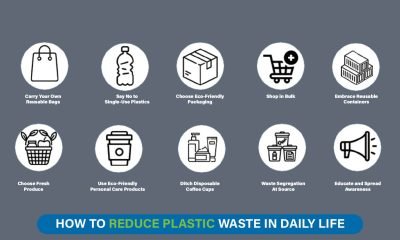 Sustainable Living Tips5 months ago
How to Reduce Plastic Waste in Daily Life
-
 Climate Change Awareness and Action8 months ago
Best Climate Change Action Plans For Businesses
-
 Sustainable Living Tips5 months ago
How to Create a Zero-Waste Home
-
 Sustainable Living Tips5 months ago
Best Sustainable Alternatives to Everyday Products


